


Home / Indian PAN Card · ภาษาไทย
Indian PAN Card for Foreigners
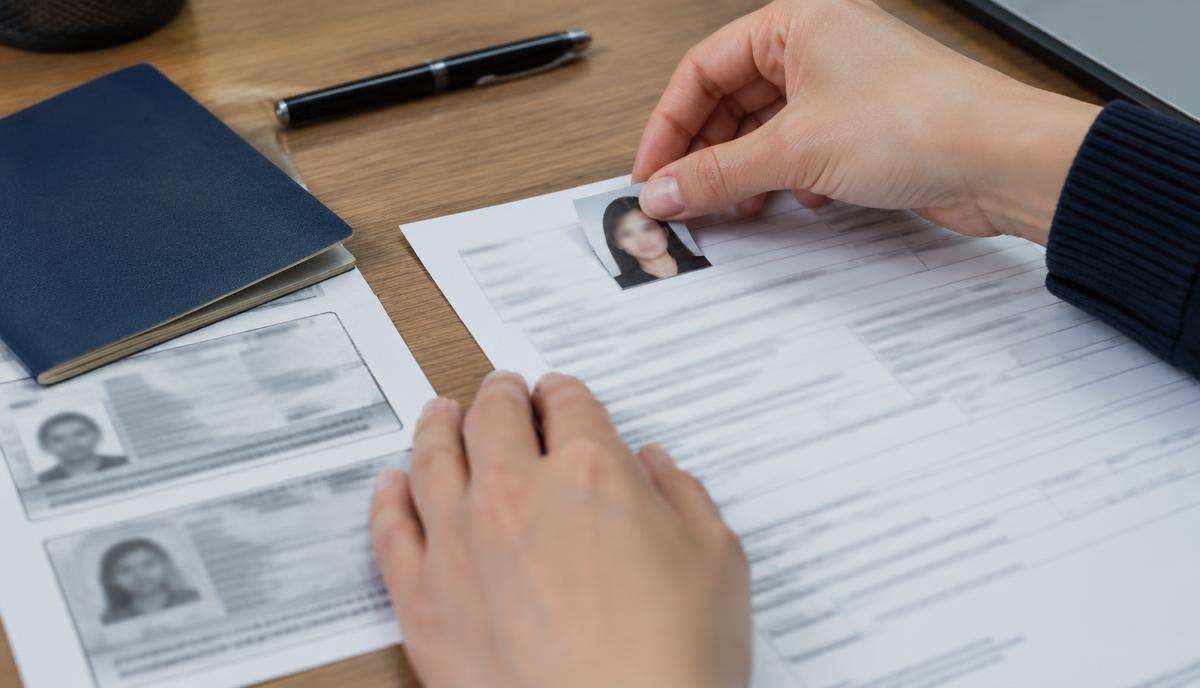
Complete Form 49AA processing from Thailand — for investment, property, Demat, and NRE/NRO accounts.
Quick Answer
We provide end-to-end PAN Card Form 49AA service for foreigners from Thailand: document preparation, notarization, Indian Embassy Bangkok authentication, NSDL/UTIITSL submission, and delivery to your Thai or Indian address. From a fee quoted after review; issuing time is set by the PAN authority.
Popular destination cities
Mumbai · Delhi · Bangalore · Chennai · Hyderabad · Kolkata · Pune · Ahmedabad · Gurgaon · Noida · Jaipur · Kochi · Chandigarh · Lucknow · Bhubaneswar · Goa · Indore · Visakhapatnam · Coimbatore · Nagpur.
FAQ
- What is a PAN Card?
- PAN (Permanent Account Number) is a 10-character alphanumeric ID issued by the Indian Income Tax Department. Foreigners need PAN for property investment, share trading (Demat), NRE/NRO bank accounts, and any Indian business or tax activity.
- Can foreigners apply from Thailand?
- Yes. We handle Form 49AA (foreign applicant), document notarization at the Indian Embassy in Bangkok, submission via NSDL/UTIITSL, and delivery of physical PAN Card + e-PAN to your Thai or Indian address.
- How long does it take?
- Standard: on a timeframe confirmed after document review end-to-end. Express (with Indian Embassy priority): on a timeframe confirmed after document review. e-PAN typically arrives within 7 days of submission.
- Cost?
- Fees depend on the documents, destination and urgency. Send your documents for a written quote after review — no prices are published. Any government or embassy fees are set by the authority; verify them directly before filing.
Contact: 083-2494999 · LINE @NYC168 · contact@nyclegal.co.th
What a PAN is and who actually needs one
The Permanent Account Number is a ten-character alphanumeric identifier issued by the Income Tax Department of India. It is the anchor identifier for Indian tax administration, and it is required well beyond the filing of a return: it is needed to open certain Indian bank and demat accounts, to transact in Indian securities, to buy or sell immovable property above the prescribed value, and to have tax deducted at the correct rate rather than a punitive default.
For non-resident Indians and foreign nationals living in Thailand, the most common trigger is not an Indian salary. It is an inheritance of Indian property, a legacy shareholding, rental income from a flat in India, or the sale of an ancestral asset where the buyer must deduct tax at source and cannot do so correctly without the seller's PAN.
The application form differs by applicant status. Indian citizens use Form 49A; foreign citizens and entities incorporated outside India use Form 49AA. Choosing the wrong form is a routine cause of rejection, and the choice follows citizenship and place of incorporation rather than where the applicant happens to live.
Documentary requirements from Thailand
| Requirement | Acceptable evidence for an applicant in Thailand | Certification |
|---|---|---|
| Identity | Passport bio page | Attested copy, commonly through the Indian Embassy or a Notarial Services Attorney depending on the route used |
| Address abroad | Thai residence certificate, bank statement, or the visa page showing the Thai permission | Attested copy; the address on the form must match the evidence exactly |
| Date of birth | Passport | Same document may serve identity and date of birth |
| Photograph and signature | Recent photographs to specification; signature within the box | Signature outside the box is a mechanical rejection |
| Entity applicants | Certificate of incorporation or registration | Attested and, where required, legalised for use with the Indian authority |
How we handle an application from Bangkok
- Status and form determination: We establish citizenship, residential status and the purpose of the PAN, then select Form 49A or 49AA and the correct application category — individual, company, trust or association.
- Name reconciliation: The name must be consistent across the passport, the supporting evidence and any existing Indian records. Middle-name and initial mismatches are the leading cause of a returned application.
- Document preparation and attestation: We prepare the copy set, arrange notarial attestation and, where the route requires it, the consular step, and translate any Thai-language evidence into English.
- Submission and tracking: We lodge the application, retain the acknowledgement number, and follow the file rather than waiting for post. The official fee for a card despatched to a foreign address is higher than the domestic fee and is published by the processing agency.
- Delivery and downstream use: We arrange delivery of the physical card to Thailand where applicable, confirm the e-PAN, and brief the client on how the PAN is quoted in Indian filings and transactions.
PAN, TDS and the cost of not having one
Where a payer in India must deduct tax at source and the payee has no PAN on record, Indian law directs deduction at a higher rate than would otherwise apply. In practice this means a non-resident seller of Indian property, or a recipient of Indian rental income, can suffer a materially larger deduction and then face a refund process that is slower and more document-intensive than simply having obtained the PAN first.
The same logic applies to inherited securities. Transfer agents and depositories work from the PAN, and an heir without one can find a legitimate inheritance frozen in administrative limbo. Because the PAN application from abroad takes weeks rather than days once attestation and postage are counted, we advise families dealing with Indian assets to start the PAN long before the transaction date, not when the buyer asks for it.
Duplicate PANs are a separate risk. Holding more than one is prohibited, and applicants who applied years ago through a relative in India sometimes hold a PAN they have forgotten. We check for an existing allotment before filing a fresh application rather than creating a duplicate that must later be surrendered.
Common mistakes and how we avoid them
More questions we are asked
- Do I need to travel to India?
- No. Applications can be prepared and lodged from Thailand with attested documents, and the card or e-PAN delivered to a foreign address.
- Is a PAN the same as an Aadhaar?
- No. Aadhaar is a resident identity number issued by a different authority; PAN is the tax identifier. Non-residents typically need the PAN and are generally outside the Aadhaar scheme.
- How long does it take from Bangkok?
- Realistically several weeks once attestation, despatch and processing are counted, which is why we start it well ahead of any Indian transaction deadline.
- Can a company registered in Thailand obtain a PAN?
- Yes, where it has Indian income or transactions requiring one. The entity applies on Form 49AA with its incorporation documents attested and, where required, legalised.
Knowledge bases behind every service
3,057 answered questions written by our lawyers and translators, grouped by service. Free to read, no sign-up.
- Master Service Hub — every service we file
The cross-service index: certified translation, interpreting, visa/work permit/BOI, tax-legal-estate, cross-border M&A, aviation & maritime, and holding-company structuring.
649 answered questions
- Certified translation — every language
Certified translation across civil, academic, corporate, contractual, financial, medical, technical and IP documents — with the Notary → MFA → embassy legalization chain handled end to end.
500 answered questions
- Thai MFA consular legalization
Thai MFA legalization workflow: fees, turnaround, inbound foreign documents, and how the chain connects to destination-country apostille requirements.
500 answered questions
Official sources — accounting, tax, social security
The information on this page follows the official sources below. Always check the latest version before you file.
- Revenue Department — Revenue Code, income tax, VAT— Revenue Department
- Social Security Office— Social Security Office
- Department of Business Development — company registration— Department of Business Development
- Office of the Council of State — Thai law database— Office of the Council of State
- Board of Investment (BOI) / LTR Visa— Thailand Board of Investment
Related services
Most document work runs across several steps — jump straight to the next one you need.
Contact us by phone, LINE or email for a free initial enquiry and a quote after document review. Timing depends on the work and relevant authorities.
General information before proceeding: Confirm current requirements with the receiving authority before using your documents. This page is not a legal opinion for your individual case — meet the team · editorial policy
Not sure which service you need? Read the guides
Each guide answers first, then explains: decision criteria, comparison tables, the real process and the mistakes we see most often.
- Choosing a certified translation provider
How to pick a translator accepted by consular, embassy and receiving bodies
- Services for expats living in Thailand
Signature certification, residence, marriage and everyday paperwork
- Notary Public and consular legalization
The correct order of steps before sending documents abroad
- Choosing the right visa and work permit
Compare visa categories and the documents each one needs translated
- Translation by language
English, Chinese, Japanese, European, Arabic, Russian and embassy rules
- Specialized translation
Contracts, financial statements, MSDS, ISO and BOI filings
Talk to us first: 083-2494999 · LINE @NYC168 · contact@nyclegal.co.th
Frequently asked questions
- How does 90-day reporting work and what happens if I miss it?
- Foreigners staying in Thailand on a long-stay permission must report their address to Immigration every 90 days, in person, by post, through an agent or online, within the window from 15 days before to 7 days after the due date. Late reporting carries a fine of 2,000 baht, rising to 4,000 baht if you are caught during an arrest, and the counter can only accept the report within the permitted window.
- What is TM30 and who must file it?
- TM30 is the notification of a foreigner's place of stay, and the legal duty falls on the house owner, condominium owner, hotel or landlord to notify Immigration within 24 hours of the foreigner's arrival at the address. Foreigners are affected in practice because Immigration frequently requires a current TM30 receipt before processing extensions, 90-day reports and re-entry permits.
- Can I convert my foreign driving licence to a Thai one?
- Yes — the Department of Land Transport allows conversion of a valid foreign licence with a certificate of residence from Immigration or an embassy letter, a medical certificate, passport and visa copies, and passing the colour, reaction and depth-perception tests. Holders of a licence from a country with a reciprocal arrangement may be exempt from the written and practical tests.
- Can a foreigner own a condominium in Thailand?
- Yes, under the Condominium Act foreigners may own units in freehold up to 49% of the total saleable floor area of the building, and the purchase funds must be remitted into Thailand in foreign currency with a Foreign Exchange Transaction certificate issued by the receiving bank for transfers of USD 50,000 or more. Land ownership remains closed to foreigners other than under BOI or specific statutory exceptions.