


Home / Police Clearance · ภาษาไทย
Thai Police Clearance Certificate
How long does a Thai police clearance take?
It depends on the Royal Thai Police workload and whether you apply in Thailand or from abroad. Plan extra time for translation and legalization if the destination needs them. Check current processing information with the Police Clearance Service Center, Special Branch Bureau, before relying on a date.
Official criminal-record clearance from the Royal Thai Police for foreigners — full-service for visa, PR, work permit, and overseas use.
Before preparing your application
Start with the written request from the authority receiving your certificate. The Police Clearance Service Center, Special Branch Bureau publishes the application forms and supporting-document lists. We help organise the file and arrange translation or legalization where the recipient requires it. Share your destination, application location and deadline for a written quotation; the issuing office controls the processing time.
What we handle
- ✓ Application and testimony form preparation
- ✓ Passport and Thai residence evidence checklist
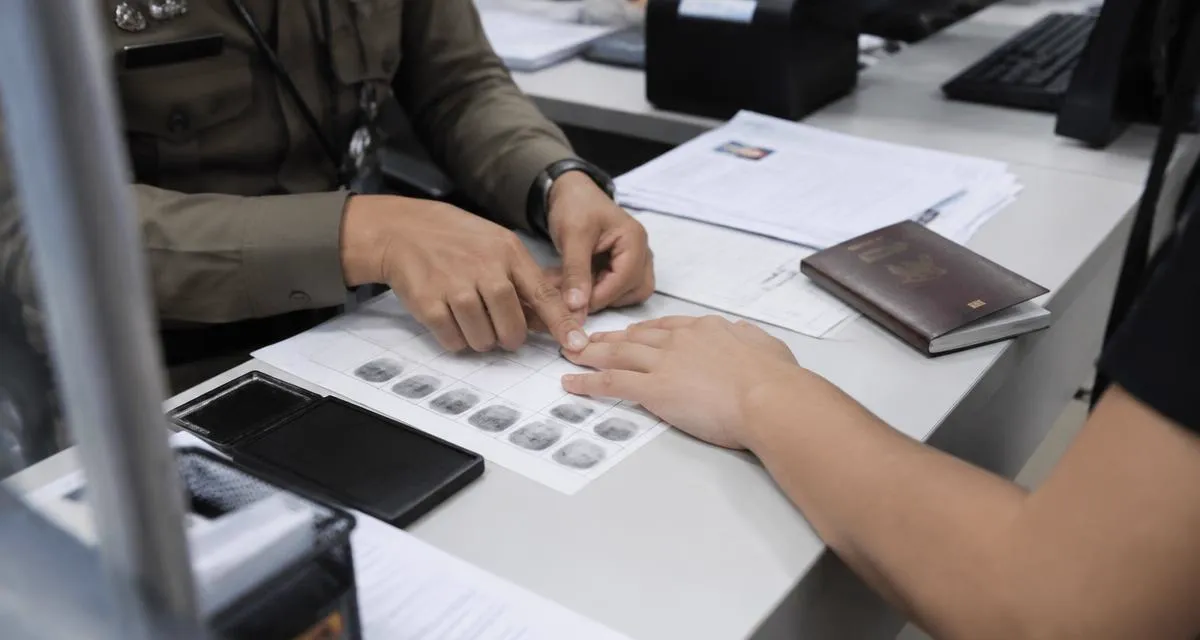
- ✓ Official fingerprint instructions for your application channel
- ✓ Power-of-attorney documents where proxy filing is permitted
- ✓ Translation matched to the recipient’s requirements
- ✓ MFA legalization where required
- ✓ Destination-embassy authentication where required
- ✓ Delivery planning against the recipient’s certificate-age limit
FAQ
- How long does a Thai police clearance take?
- Confirm the current processing estimate with the Police Clearance Service Center, Special Branch Bureau. Missing documents, record checks, overseas post and any required translation or legalization can add time. We do not promise priority police processing or a fixed issue date.
- Can foreigners apply?
- Yes. The Police Clearance Service Center publishes separate instructions for applicants in Thailand and abroad. Prepare a valid passport, evidence of residence or work in Thailand, applicable visa pages and documents showing why the certificate is requested. Follow the official fingerprint instructions for your application channel.
- Cost?
- Fees depend on the documents, destination and urgency. Send your documents for a written quote after review — no prices are published. Any government or embassy fees are set by the authority; verify them directly before filing.
- Is Apostille available?
- The Convention enters into force for Thailand on 28 February 2027. Before then, where authentication is required, confirm the MFA and destination-embassy steps with the recipient. Not every police certificate needs legalization. After entry into force, confirm that the Convention applies between Thailand and the destination and that the document is eligible.
Choose the application route before taking fingerprints
A Thai police clearance for overseas use is handled by the Police Clearance Service Center of the Special Branch Bureau. Use its current forms and instructions rather than assuming that a domestic criminal-record search is the same service. The recipient’s request should identify the applicant and the purpose of the certificate.
The official guidance separates applicants residing in Thailand from applicants abroad. A foreign applicant in Thailand should prepare a valid passport, Thai visa and latest entry stamp, evidence of living or working in Thailand, a work permit if available, and the purpose-specific documents listed by the issuing office. The list is a starting point, not a promise that no further evidence will be requested.
Thailand and overseas applications: what changes
| Where you apply | Preparation to check | Extra planning |
|---|---|---|
| In Thailand | Current in-person instructions and original identification | Confirm the appointment or attendance process before travelling |
| Abroad | Application, testimony form and two original fingerprint sets following the official guidance | Check local police or Thai embassy arrangements and postal delivery |
| Through a representative | Power of attorney and identification copies specified by the issuing office | A representative cannot supply your fingerprints for you |
| After a name or passport change | Name-change evidence and relevant old/new identity documents | Ask how the certificate should identify you before filing |
Plan the certificate, translation and authentication as separate steps
- Read the recipient’s checklist: Confirm whether it needs a Thai certificate, the acceptable certificate age, and the name and purpose to be used.
- Prepare the police application: Use the forms for your location and follow the official instructions for fingerprints and supporting evidence.
- Allow for the issuing office’s review: Missing evidence or further checks can extend processing. Do not book an irreversible deadline around an unconfirmed express service.
- Check the issued document: Review identity details and the recipient’s requirements before ordering any translation or authentication.
- Complete only the required follow-on work: Translation, MFA legalization and embassy authentication are not interchangeable and are not required for every use.
What the certificate does not decide
A police certificate does not itself grant a visa, residence permission or professional registration. The receiving authority evaluates it with the rest of the application and may ask for certificates from other countries.
If you are concerned about an entry or a mismatch, obtain the relevant police or court documents and ask the issuing office how to raise the issue. Do not assume that a dismissed case, overstay or old passport has a particular effect on the certificate without official confirmation.
Common mistakes and how we avoid them
More questions we are asked
- Where can I find the current forms?
- Use the Police Clearance Service Center website linked in the official references below. It provides application, testimony and fingerprint forms.
- Can I apply from abroad?
- The official overseas process allows postal submission or someone in Thailand submitting on your behalf. Follow its supporting-document, fingerprint and power-of-attorney requirements.
- Does the certificate cover other countries?
- It is a Thai police certificate. If the recipient requests checks from other countries, those must be obtained from the relevant authorities.
- Must it be translated?
- Ask the recipient which language and translator credentials it accepts. Do not order a second translation merely because a destination country has a different official language.
Knowledge bases behind every service
3,057 answered questions written by our lawyers and translators, grouped by service. Free to read, no sign-up.
- Certified translation — every language
Certified translation across civil, academic, corporate, contractual, financial, medical, technical and IP documents — with the Notary → MFA → embassy legalization chain handled end to end.
500 answered questions
- Thai MFA consular legalization
Thai MFA legalization workflow: fees, turnaround, inbound foreign documents, and how the chain connects to destination-country apostille requirements.
500 answered questions
- Police clearance certificate
Royal Thai Police clearance certificates for applicants in Thailand and abroad, with translation, MFA legalization and destination-embassy filing.
500 answered questions
📚 Official application instructions
Official sources — police clearance certificate
The information on this page follows the official sources below. Always check the latest version before you file.
- Police Clearance Service Centre— Royal Thai Police
- Central Investigation Bureau — criminal record checks— Royal Thai Police
- Department of Consular Affairs — document legalisation— Ministry of Foreign Affairs
- HCCH — Apostille Convention (5 October 1961) full text & status table— Hague Conference on Private International Law
- Immigration Bureau — visas, 90-day reporting, TM.30— Immigration Bureau
Related services
Most document work runs across several steps — jump straight to the next one you need.
Contact us by phone, LINE or email for a free initial enquiry and a quote after document review. Timing depends on the work and relevant authorities.
General information before proceeding: Confirm current requirements with the receiving authority before using your documents. This page is not a legal opinion for your individual case — meet the team · editorial policy
Not sure which service you need? Read the guides
Each guide answers first, then explains: decision criteria, comparison tables, the real process and the mistakes we see most often.
- Choosing a certified translation provider
How to pick a translator accepted by consular, embassy and receiving bodies
- Services for expats living in Thailand
Signature certification, residence, marriage and everyday paperwork
- Notary Public and consular legalization
The correct order of steps before sending documents abroad
- Choosing the right visa and work permit
Compare visa categories and the documents each one needs translated
- Translation by language
English, Chinese, Japanese, European, Arabic, Russian and embassy rules
- Specialized translation
Contracts, financial statements, MSDS, ISO and BOI filings
Talk to us first: 083-2494999 · LINE @NYC168 · contact@nyclegal.co.th
Contact: 083-2494999 · LINE @NYC168 · contact@nyclegal.co.th
Frequently asked questions
- Where is a Thai police clearance certificate issued and what is needed?
- For overseas-use police certificates, consult the Police Clearance Service Center, Special Branch Bureau. Its website lists current office details, forms and separate instructions for applicants in Thailand and abroad. Prepare identification, purpose documents and Thai residence evidence where applicable, and follow the fingerprint requirements for your application channel.
- How long does the certificate take?
- Use the issuing office’s current processing estimate and allow for missing evidence, further checks and delivery. Translation or authentication, where required, adds separate stages. A preparation service cannot guarantee the police issue date.
- Can someone apply on my behalf while I am overseas?
- The official overseas guidance allows postal submission or someone in Thailand submitting on your behalf. Follow its requirements for original fingerprints, identification copies, power of attorney and representative identification. Confirm any certification requirements with the issuing office rather than assuming notarization is always needed.
- Does the certificate expire?
- The receiving authority sets the acceptable certificate age for the particular application. Ask for its written rule and sequence the certificate, delivery and follow-on work around that deadline; do not assume a universal validity period.