

Home / Certified True Copy · ภาษาไทย
Certified True Copy Notarization
What is a notarized certified true copy?
It is a copy of a passport, degree or other document that a Notarial Services Attorney has compared with the original and certified as a true copy with signature and seal. Bring the original. Some authorities also require legalization. Check what the receiving office accepts.
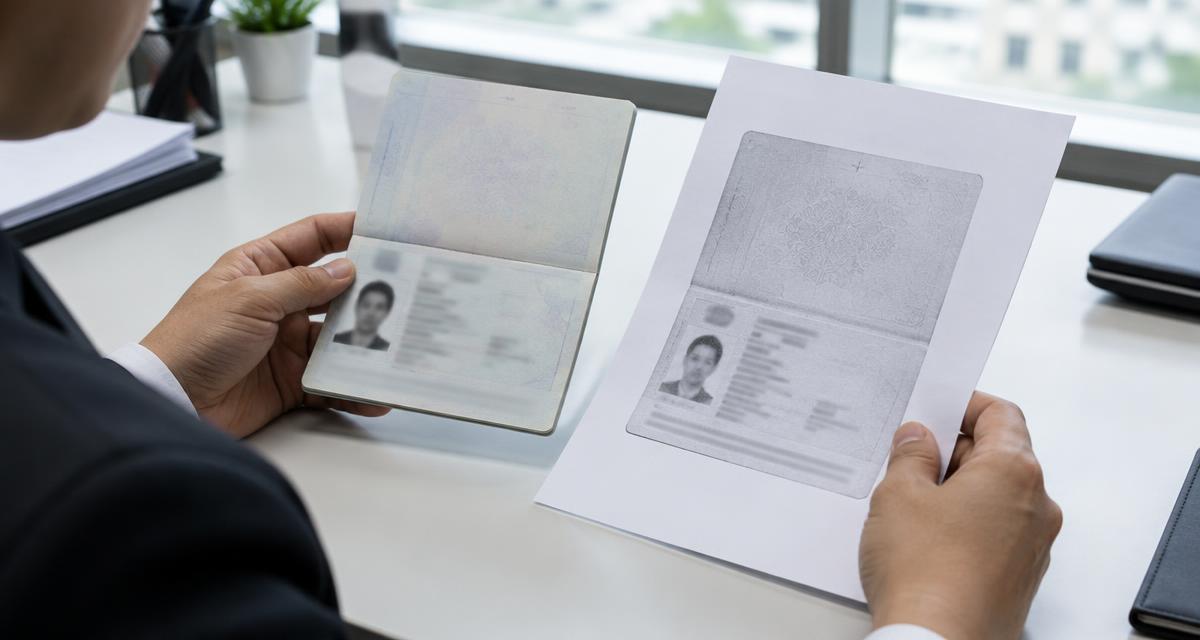
Bring the original and the recipient’s instructions. A certified copy confirms the comparison with the original; acceptance depends on the receiving authority.
Prepare before your appointment
Tell us the document type, number of copies, destination and receiving authority. Bring the original document and current identification as requested for the appointment. Send any required certification wording in advance; fees and arrangements are confirmed after the scope is reviewed.
Common originals we certify
- ✓ Passport / ID card
- ✓ Tabien Baan (House Registration)
- ✓ Birth / marriage / death certificate
- ✓ Academic transcripts + degree
- ✓ DBD corporate certificate
- ✓ Land Office chanote
- ✓ Bank statement + reference letter
- ✓ Foreign originals (in-person)
FAQ
- What is a Certified True Copy under Thai law?
- A copy compared with the original presented to a Notarial Services Attorney and certified as corresponding to that original. It does not verify that the issuing authority's records are genuine, and it is not automatically accepted worldwide. Ask the recipient which certifier and wording it accepts.
- Which originals can you certify?
- Passports, ID cards, Tabien Baan, birth / marriage / death certificates, academic transcripts, corporate registration (DBD), Land Office title deeds, bank statements, PDPA-cleared HR files, and foreign originals presented in-person.
- Can I request true-copy certification remotely?
- A scan or video alone does not allow physical comparison with the original. Ask which originals must be presented and whether delivery is suitable before sending anything. If you are abroad, ask the recipient whether it accepts a local notary or consular certification instead.
- Rates?
- Fees depend on the documents, destination and urgency. Send your documents for a written quote after review — no prices are published. Any government or embassy fees are set by the authority; verify them directly before filing.
Contact: 083-2494999 · LINE @NYC168 · contact@nyclegal.co.th
How certified true copies work under Thai law
Thailand has no civil-law notary profession. Instead, the Lawyers Council of Thailand under Royal Patronage licenses attorneys as Notarial Services Attorneys, empowered to certify signatures, administer oaths, and certify that a copy is a true copy of a document produced to them. The certification speaks to the act of comparison: the attorney saw the original, compared it to the copy, and attests that they correspond. It does not attest that the original is genuine or that its contents are true.
That distinction decides which document is acceptable abroad. A university may accept a lawyer-certified degree copy, while a registrar may require a record-holder-issued civil-status extract. Ask the recipient which form it needs; notarial comparison does not replace an extract from the issuing authority.
What we can and cannot certify
| Item | Certifiable as true copy | Note |
|---|---|---|
| Passport photo page | Yes | Most common request; original passport must be produced |
| Degree and transcript | Yes | Original or registrar-sealed copy must be sighted |
| Thai ID card | Yes | Both faces on one page with the attorney seal spanning |
| Company affidavit (DBD) | Yes | Freshness rule of the receiving party usually applies |
| Bank statement | Yes | Bank-stamped original preferred; internet printouts need bank certification first |
| Civil registration extract | Confirm recipient requirements | Receiving registrars usually require an amphoe-issued copy |
| A copy of a copy | No | The original must be produced for comparison |
Attendance, identification and remote options
- Confirm which originals and identification must be presented before booking or arranging delivery. Do not send irreplaceable documents without agreed handling arrangements.
- Bring current identification and ask the attorney which supporting documents are required for the certification you need.
- Do not assume a video call or scan is sufficient for true-copy certification. Confirm how the original will be examined and whether the recipient accepts the proposed method.
- If further authentication is required, confirm the current signature-verification and submission requirements with the Department of Consular Affairs.
Common mistakes and how we avoid them
More questions we are asked
- Is a Thai notarial certification recognised abroad?
- Acceptance is decided by the receiving party. Ask whether it accepts a Thai Notarial Services Attorney, an issuing-authority copy or a consular certificate, and whether further authentication is necessary.
- How many copies should I order?
- Ask each recipient how many copies it retains and whether one certification can cover the complete document. Order the number actually needed.
- Can you certify a copy of my passport while I am overseas?
- Not as a true copy, because the original cannot be sighted. The usual alternative is certification by a notary in your current country, or by a Thai consular officer.
- Does a certified true copy expire?
- The recipient may set a maximum age for the certification or the underlying document. Ask for its actual rule rather than assuming a universal three- or six-month limit.
- What identification is acceptable?
- A passport for foreign nationals, a Thai national ID card for Thai nationals. Expired identification is not accepted even where the person is known to the attorney.
Knowledge bases behind every service
3,057 answered questions written by our lawyers and translators, grouped by service. Free to read, no sign-up.
- Master Service Hub — every service we file
The cross-service index: certified translation, interpreting, visa/work permit/BOI, tax-legal-estate, cross-border M&A, aviation & maritime, and holding-company structuring.
649 answered questions
- Thai MFA consular legalization
Thai MFA legalization workflow: fees, turnaround, inbound foreign documents, and how the chain connects to destination-country apostille requirements.
500 answered questions
- Notary Public / Notarial Services Attorney
Notarial Services Attorney: signature and document certification, certified copies, translations, powers of attorney, corporate records and expatriate paperwork.
200 answered questions
Official sources — legalization, apostille, notary
The information on this page follows the official sources below. Always check the latest version before you file.
- Department of Consular Affairs — document legalisation— Ministry of Foreign Affairs
- Legalization e-Service appointment system— Department of Consular Affairs
- HCCH — Apostille Convention (5 October 1961) full text & status table— Hague Conference on Private International Law
- Lawyers Council of Thailand — Notarial Services Attorneys— Lawyers Council of Thailand
- Department of Provincial Administration — civil & family registration— Department of Provincial Administration
- Royal Thai Government Gazette— Royal Thai Government Gazette
Related services
Most document work runs across several steps — jump straight to the next one you need.
- Certified translation
- Notary Public
- Consular legalization
- Police clearance certificate
- Company & BOI
- Full service index
Contact us by phone, LINE or email for a free initial enquiry and a quote after document review. Timing depends on the work and relevant authorities.
General information before proceeding: Confirm current requirements with the receiving authority before using your documents. This page is not a legal opinion for your individual case — meet the team · editorial policy
Not sure which service you need? Read the guides
Each guide answers first, then explains: decision criteria, comparison tables, the real process and the mistakes we see most often.
- Choosing a certified translation provider
How to pick a translator accepted by consular, embassy and receiving bodies
- Services for expats living in Thailand
Signature certification, residence, marriage and everyday paperwork
- Notary Public and consular legalization
The correct order of steps before sending documents abroad
- Choosing the right visa and work permit
Compare visa categories and the documents each one needs translated
- Translation by language
English, Chinese, Japanese, European, Arabic, Russian and embassy rules
- Specialized translation
Contracts, financial statements, MSDS, ISO and BOI filings
Talk to us first: 083-2494999 · LINE @NYC168 · contact@nyclegal.co.th
Frequently asked questions
- Does Thailand have notaries public?
- Thailand uses Notarial Services Attorneys registered with the Lawyers Council of Thailand for notarial acts within their permitted scope. Acceptance abroad depends on the recipient. Ask which certifier, wording and any additional authentication it requires; notarial certification is not the same as an Apostille.
- What documents can a Notarial Services Attorney certify?
- Commonly certified items include signatures on powers of attorney, affidavits and statutory declarations, certified true copies of passports and corporate documents, company resolutions and share transfer forms, sponsorship and consent letters, and the identity of a signatory for foreign banks, universities and courts. The attorney certifies the signing act or copy fidelity — not the truth of the content.
- Do I have to sign in person?
- Yes. The attorney must see the signatory in person together with the original passport or Thai ID before certifying a signature, which is the core safeguard of the service. Remote or scanned signatures cannot be certified. Mobile appointments at your office, condominium lobby or a nearby café are available if you cannot come to ours.
- How much does notarial certification cost and how fast is it?
- Attorney notarial certification starts at the current official rate per document, with the final price depending on the number of documents, signatories and whether the appointment is mobile or out of hours. The certification itself is completed during the appointment; only the subsequent MFA and embassy steps add working days.
More on Notary Public / Notarial Services Attorney →All FAQs